Sunday, January 1, 2012

Viking Tattoo Pictures And Cultural History

Viking Tattoo PicturesViking Tattoo Pictures

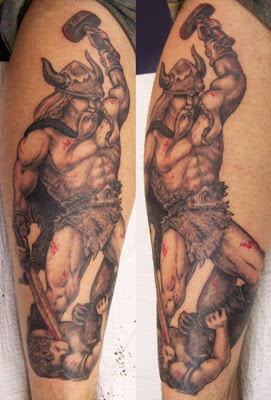
The concept of the Viking is similar to that of the pirate, but the symbols used in each tattoo are quite different. They symbols that many Viking tattoos have in common include the sword, ship, and beard. Most are also displayed with muscular, strong bodies.
Viking Tattoo PicturesViking Tattoo Pictures

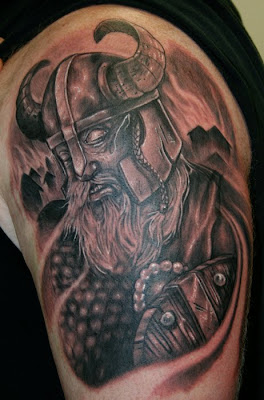
A Viking tattoo can also represent the darker side of the culture. Some present close-up facial portraits of men with the characteristic long, shaggy beard. Others trade the beard for patches of animalistic fur across the face and shoulders. These portraits typically feature piercing eyes portrayed with dark black and white shading.

Viking Tattoo PicturesViking Tattoo Pictures

Picture of a viking warrior armed with a sword and posed in a striking fashion. Once again we see the classic horned helmet upon his head.

Viking Tattoo PicturesViking Tattoo Pictures

Some may be represented on horses and may have elaborate headgear. For the most part, these are strong tattoos designed to deliver a perception of courage, danger, or fear.

Viking Tattoo PicturesViking Tattoo Pictures

Picture of a superbly drawn viking back piece featuring a pair of warriors armed for battle. Donning long beards and fierce expressions.

Viking Tattoo PicturesViking Tattoo Pictures

Picture of a color-rich viking tattoo featuring a blonde headed man with braided hair and piercing eyes. Design is located on the shoulder and upper arm.

Viking Tattoo PicturesViking Tattoo Pictures

Here we see some traditional viking artwork featuring a scowling male with horned headgear and long facial hair.

Wedding photography

wedding photography
Wedding Photography
Wedding photography is the photography of activities relating to weddings. It encompasses photographs of the couple before marriage (for announcements, portrait displays, or thank you cards) as well as coverage of the wedding and reception (sometimes referred to as the wedding breakfast in non-US countries). It is a major commercial endeavor that supports the bulk of the efforts for many photography studios or independent photographers.
wedding photography
Wedding Photography
Like the technology of photography itself, the practice of wedding photography has evolved and grown since the invention of the photographic art form in 1826 by Joseph Nicéphore Niépce.In fact, an early photograph, recorded some 14 years after the fact, may be a recreation for the camera of the 1840 wedding of Queen Victoria to Prince Albert. However, in the early days of photography, most couples of more humble means did not hire a photographer to record the actual wedding itself. Until the later half of the 19th century, most people didn’t pose for formal wedding photos during the wedding. Rather, they might pose for a formal photo in their best clothes before or after a wedding. In the late 1860s, more couples started posing in their wedding clothes or sometimes hired a photographer to come to the wedding venue.
wedding photography
Wedding Photography
Due to the nature of the bulky equipment and lighting issues, wedding photography was largely a studio practice for most of the late 19th century. Over time, technology improved, but many couples still might only pose for a single wedding portrait. Wedding albums started becoming more commonplace towards the 1880s, and the photographer would sometimes include the wedding party in the photographs. Often the wedding gifts would be laid out and recorded in the photographs as well.At the beginning of the 20th century, color photography became available, but was still unreliable and expensive, so most wedding photography was still practiced in black and white. The concept of capturing the wedding "event" came about after the Second World War. Using film roll technology and improved lighting techniques available with the invention of the compact flash bulb, photographers would often show up at a wedding and try to sell the photos later. Despite the initial low quality photographs that often resulted, the competition forced the studio photographers to start working on location.
wedding photography
Wedding Photography
Initially, professional studio photographers might bring a lot of bulky equipment, thus limiting their ability to record the entire event. Even "candid" photos were more often staged after the ceremony. In the 1970s, the more modern approach to recording the entire wedding event started evolving into the practice as we know it today, including a more "documentary" style of photography.
wedding photography
Wedding Photography

wedding photography
Wedding Photography

wedding photography
Wedding Photography

wedding photography
Wedding Photography

Followers